Revolutionising Australian Corporate Meetings with Graphic Recording
Graphic Recording in Australia brings ideas to life through visual storytelling, transforming complex concepts into engaging illustrations. This powerful technique enhances motivation, fosters community engagement and even elevates podcast content. In this article, we delve into how graphic recording can revolutionise your business outcomes and why it’s become an essential tool for forward-thinking organisations.
What Is Graphic Recording?
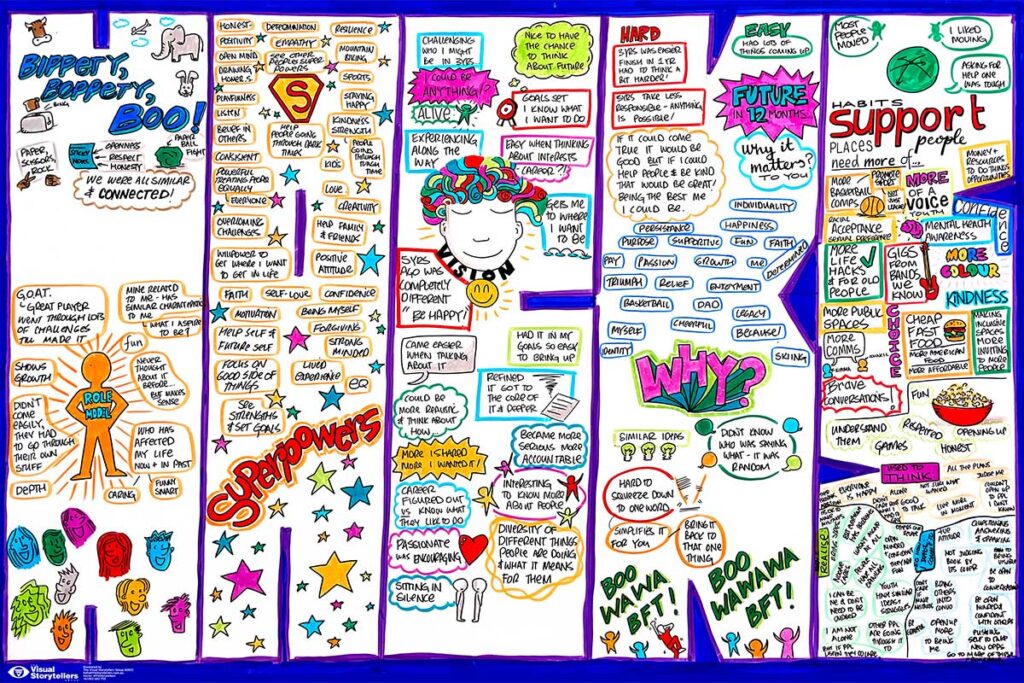
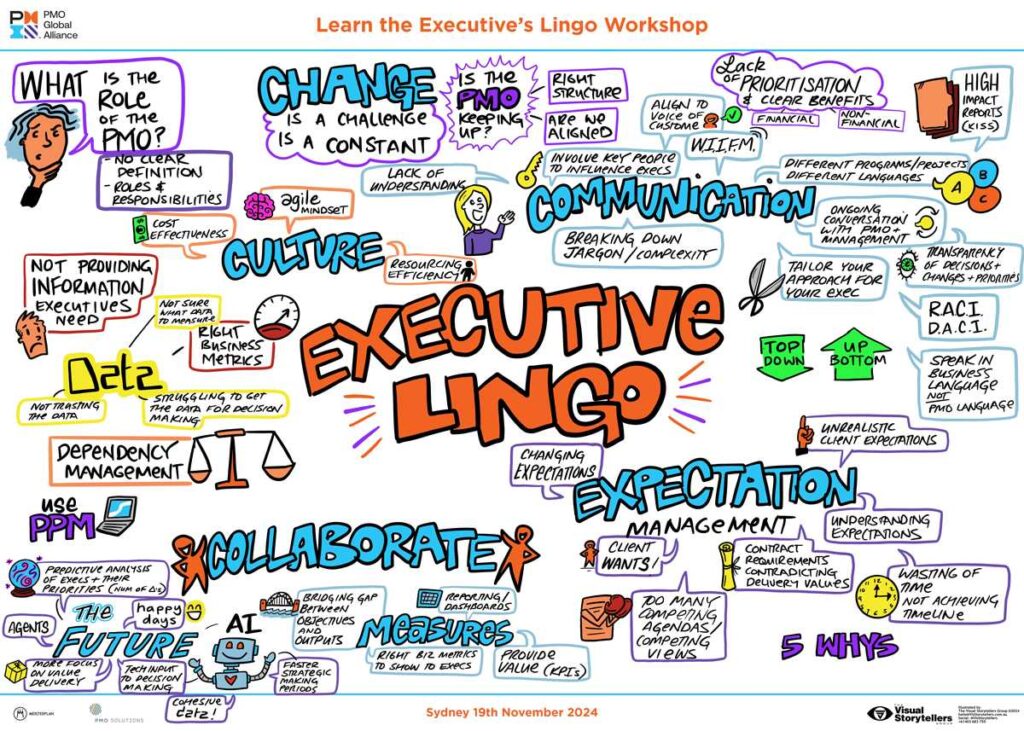
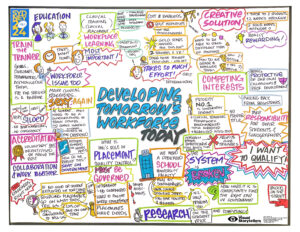
According to an article by Illustrated Live, graphic recording is a live visual recording technique that captures the essence and key points of a meeting, presentation, or event in real time! Graphic recording is a dynamic process that transforms complex ideas into visual representations, enhancing understanding and retention in business settings. In the field of visual communication, this powerful tool can bring clarity to data-heavy presentations and breathe life into abstract concepts. From small-scale sketches to large-format displays, and from virtual sessions to in-person events, graphic recording adapts to various environments. Whether actively created during a live session or crafted after the fact, these visual notes capture the essence of discussions, making information more accessible and memorable for all participants.
“It has been said that 80% of what people learn is visual.” – Allen Klein, an American Businessman and the Founder of ABKCO Music & Records Incorporated“It has been said that 80% of what people learn is visual.” – Allen Klein, an American Businessman and the Founder of ABKCO Music & Records Incorporated
Virtual vs. In-Person Graphic Recording
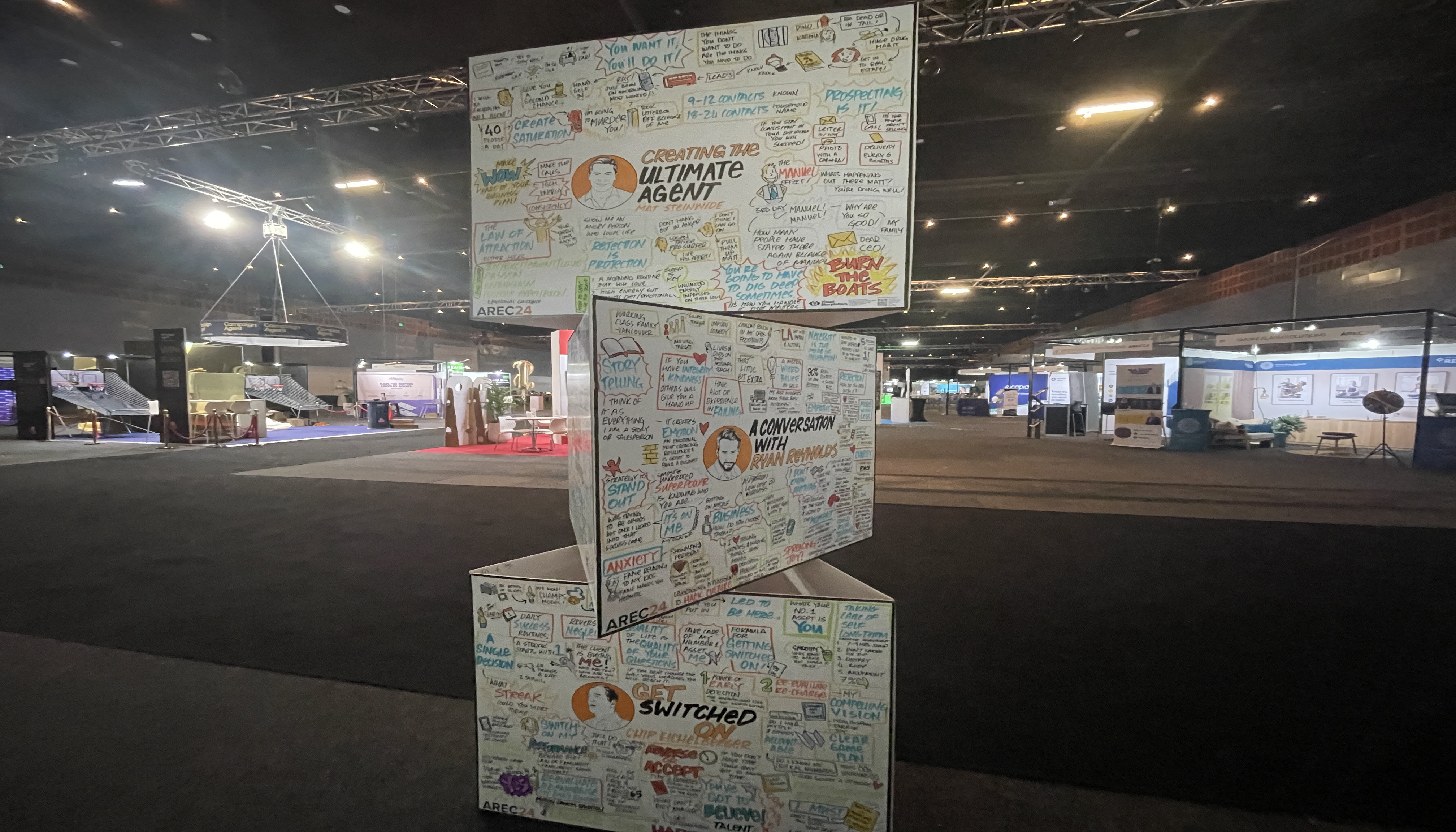
Visual thinkers adapt their graphic recording techniques to both virtual and in-person settings to provide a better experience. Virtual sessions allow people to share their screen, enabling real-time collaboration and instant distribution of digital content. This approach works particularly well for remote brainstorming and online workshops. On the other hand, in-person graphic recording offers a more tangible experience, almost a performance, where participants can watch the visual thinking process unfold before their eyes, often in the form of large-scale illustrations drawn on large artboards with pens or projected to screen drawing on an iPad. The choice between virtual and in-person depends on the event’s nature and the desired impact:
| Virtual Graphic Recording | In-Person Graphic Recording |
| Digital tools and platforms | Traditional materials (markers, paper) |
| Global Accessibility | Immediate physical presence |
| Easy sharing and editing | Interactive and engaging atmosphere |
Physical vs. Digital Graphic Recording
Both physical and digital graphic recording methods, each offer unique advantages for capturing conversations and enhancing recall. For physical graphic recording, using markers on large paper sheets creates a tangible design that participants can touch and interact with directly. While graphic recording, on the other hand, allows for seamless integration of thought processes with technology, enabling quick edits and easy sharing of the final product.
“Technology is best when it brings people together.” – Matt Mullenweg, An American Entrepreneur, Web Developer and the Creator of WordPress
| Physical Graphic Recording | Digital Graphic Recording |
| Tactile experience | Easy editing and sharing |
| No technical Issues | Integration with digital platforms |
| Immediate visual impact | Scalable and adaptable |
Active vs. Passive Graphic Recording
Active and passive recording techniques both capture the essence of meetings and enhance leadership communication. Active graphic recording involves real-time visualisation of ideas as they unfold, allowing the artist to create a dynamic visual language that evolves with the discussion. The artist working with the facilitator or presenter to be an active tool in the facilitation of the discussion. This approach fosters engagement and can shape the direction of the conversation. In contrast, passive graphic recording occurs when the graphic recorder is a silent witness or artistic fly on the wall, where they capture diligently without too much active engagement with participants or facilitator. Crafting a visual narrative or visual story of the meeting. Both methods have their place in graphic facilitation, with the choice often depending on the desired impact and the nature of the storytelling required to convey the core message effectively.
Why Use Graphic Recording?
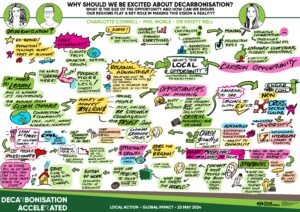
Visual storytelling can transform complex ideas into accessible graphics. Whether you’re working with a university lecture or working on a corporate strategy session, the use of a whiteboard and large paper sheet captures attention in ways that traditional presentations simply can’t match.
Graphic recording often focuses a meeting and ensures that focus stays engaged throughout. Keeping the flow of the meeting going and all notes captured meaning the meeting is accelerated. It is said that meetings that use graphic recording or visual storytelling are more productive and usually finished in 75% of the time a similar meeting would take.
Graphic recording helps to retain information long after a meeting ends. By creating visual notes that blend text and imagery, this helps to ensure that key concepts stick in people’s minds. . This approach proves particularly effective when dealing with data-heavy topics or abstract ideas that might otherwise be difficult to grasp.
The power of graphic recording lies in its ability to foster engagement and spark creativity. Furthermore, according to a blog by Learnexus, graphic recording encourages creative thinking and expression. It inspires participants to approach problems and ideas from different angles, fostering a culture of innovation and openness. As Sketching out ideas in real-time, participants often become more involved, offering insights and building upon each other’s thoughts. This collaborative atmosphere often leads to innovative solutions and better business outcomes
Why Choose The Visual Storytellers Group for Graphic Recording?
Graphic recording in Australia transforms complex ideas into visually engaging narratives, enhancing understanding and retention in business settings. This dynamic process, whether conducted virtually or in-person, captures the essence of discussions and fosters innovation by helping participants see relationships and patterns they might otherwise miss.
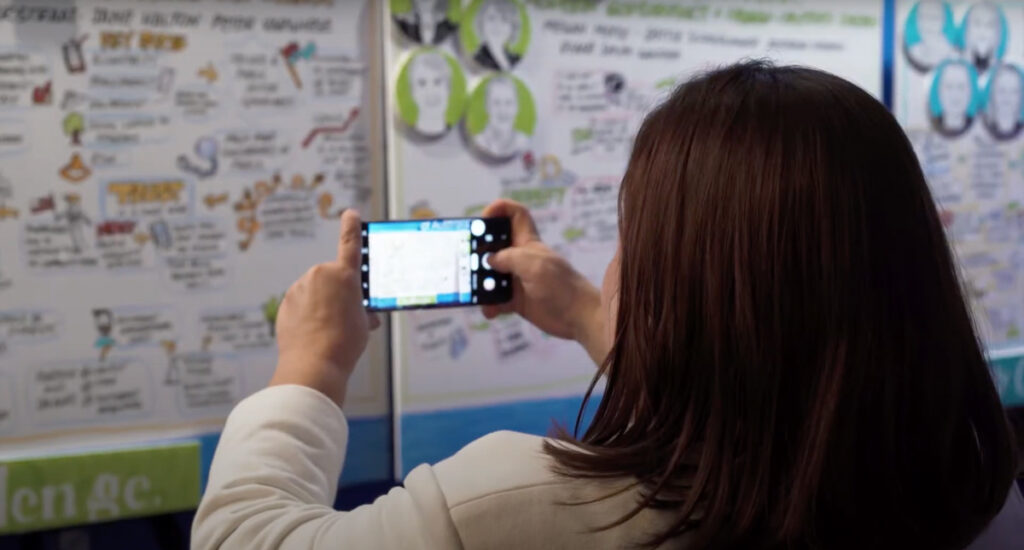
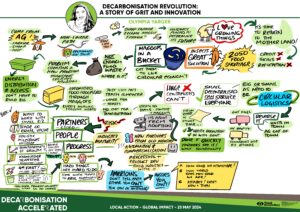
Here at the Visual Storytellers Group, we specialise in creating large-scale wall graphics that serve as powerful learning tools in both corporate and education settings. Our work goes beyond mere illustration; we craft visual stories that enhance understanding and retention, turning abstract concepts into memorable models that resonate with diverse audiences. Schedule a discovery call with one of our experts here at The Visual Storytellers Group and harness the power of visual storytelling. Elevate your message, drive engagement and achieve better outcomes in all of your meetings and conferences today.
FAQs
Graphic recording is a visual technique used to capture spoken words, ideas, and concepts during meetings, workshops, and conferences into engaging, real-time illustrations. It’s employed widely across Australia to enhance comprehension and engagement.
Graphic recording in Australia enhances meetings by visually summarising discussions, fostering better understanding, and retaining attention. It converts complex data and abstract ideas into clear and engaging visuals, making information more accessible and memorable.
Virtual graphic recording utilises digital tools to capture and share visuals in real-time over platforms like Zoom, enhancing remote collaboration. In-person graphic recording, on the other hand, involves creating large-scale visuals live, adding a dynamic and interactive element to physical meetings.
Graphic recorders use a variety of tools depending on the format. For in-person sessions, materials may include markers, large paper sheets, or whiteboards. Digitally, software like Procreate or Adobe Fresco on tablets allows for versatile and shareable visual content.
Yes, graphic recording in Australia can be customised to fit any type of business meeting, workshop, or conference, regardless of the industry. Graphic recorders work closely with organisers to tailor visuals that resonate with the specific audience and objectives.
Digital graphic recording offers greater flexibility in editing and distributing the recorded content. It’s especially beneficial for virtual meetings and events where participants are geographically dispersed, making sharing and collaboration easier.
Graphic recording actively involves participants by visually mapping out their contributions, which enhances engagement and encourages a more collaborative atmosphere. This visual interaction helps spark creativity and drive innovative solutions in group settings.
The Visual Storytellers Group is one of the leading agencies in Australia specialising in graphic recording. They offer a range of services from live scribing to digital graphic recording tailored to your business needs. You can book a session or a discovery call through their website to learn more.
Ready to see how graphic recording can transform your meetings? Schedule a free discovery call with one of our experts at The Visual Storytellers Group and start your journey toward more engaging and productive conferences!
Schedule a Discovery Call Today!