The Benefits of Collaborating with a Visual Storytelling Agency for Your Social Media Content.In today’s digital age, capturing and retaining your audience’s attention is more challenging than ever. A visual…

Beyond the Words: How to Create a Visual Narrative That Resonates with Your AudienceIn the realm of communication, visual storytelling is not just an art form; it’s an essential strategy…
The Power of Visual Storytelling: Why Pictures Are Worth More Than WordsIn the realm of communication, visual storytelling has emerged as a powerful tool, transcending the limitations of verbal and…
The Psychology Behind Whiteboard Animation: Why it WorksIn an era saturated with digital content, standing out requires not just creativity but an understanding of how viewers process and engage with…
The Benefits of Whiteboard Animation Videos for Educational ContentIn the realm of educational content, engagement, clarity, and retention are paramount. One innovative method that has significantly impacted these areas is…
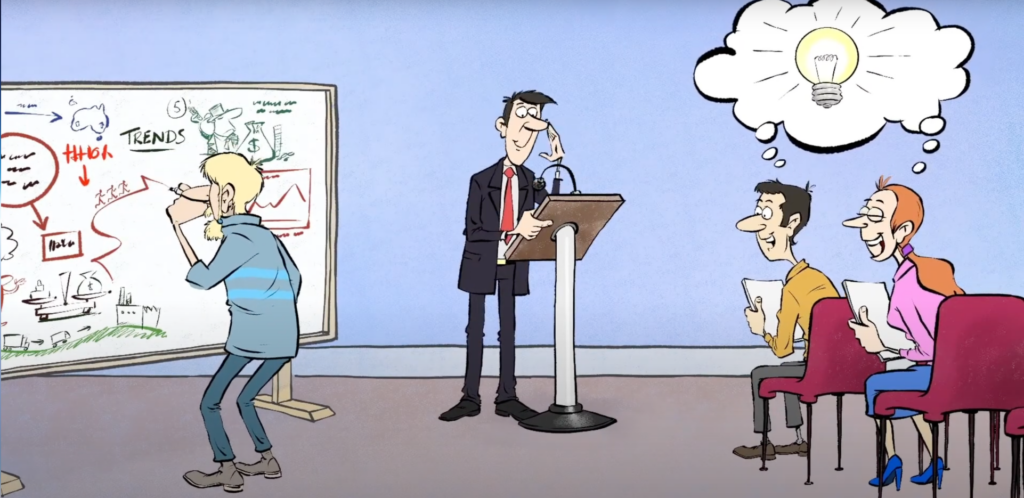
Maximising Meeting Impact: The Power of Graphic RecordingIn today’s fast-paced corporate environment, where ideas are as fleeting as they are numerous, the concept of ‘graphic recording‘ has emerged as a…
Why Graphic Recording is an Essential Tool for Design ThinkingIn the ever-evolving landscape of design thinking, where ideas flow as rapidly as the need for innovation, one tool has emerged…
Visual Storytelling: Using Graphic Recording to Engage Your AudienceIn today’s dynamic world, where attention spans are shrinking and the demand for engaging content is ever-increasing, graphic recording emerges as a…
In the ever-evolving landscape of business, ‘change communication‘ stands as a pivotal element in orchestrating successful organisational transformation. This concept goes beyond mere information dissemination; it’s about crafting a narrative…
From Doodles to Deliverables: How Whiteboard Sketches Can Enhance Your Design ProcessIn the fast-paced world of design, whiteboard sketch often evokes images of creative brainstorming sessions, where ideas flow freely…
Visual storytelling is a crucial element in establishing and communicating a brand's identity. By integrating visual narratives into branding strategies, companies can create a cohesive identity that resonates with their target audience. This approach not only enhances brand recognition but also fosters emotional connections with consumers.
For instance, brands like Airbnb and Coca-Cola utilize strong visual storytelling techniques in their marketing campaigns to convey their values and mission. By employing consistent imagery and narratives, these brands effectively communicate their stories, making them more relatable and memorable to their audience.
Enhancing User Experience Through Visual Content
In today's digital landscape, enhancing user experience (UX) is paramount, and visual content plays a significant role in achieving this goal. Effective visual storytelling can simplify complex information, making it more digestible for users. This leads to improved engagement and satisfaction across various platforms.
Studies have shown that users are more likely to retain information presented visually compared to text alone. For example, websites that incorporate infographics and videos experience higher user retention rates, as these formats not only capture attention but also facilitate better understanding of the content being presented.
Visual Storytelling in Crisis Communication
During crises, effective communication is vital, and visual storytelling can be a powerful tool in conveying essential messages quickly and clearly. By utilizing visuals, organizations can communicate their responses and updates in a way that is easily understood, helping to alleviate confusion and fear among stakeholders.
For instance, during the COVID-19 pandemic, many health organizations used infographics and visual aids to communicate safety protocols and guidelines. This approach not only informed the public but also reinforced trust in the messaging, showcasing the importance of visual storytelling in crisis management.
The Future of Visual Storytelling: Trends to Watch
The landscape of visual storytelling is constantly evolving, with new technologies and trends shaping how narratives are created and consumed. As augmented reality (AR) and virtual reality (VR) become more mainstream, they offer exciting opportunities for immersive storytelling experiences that engage audiences in novel ways.
For example, brands are beginning to experiment with AR applications that allow users to interact with their products in a virtual space, enhancing the overall storytelling experience. Keeping an eye on these emerging trends will be essential for marketers and communicators looking to stay ahead in the competitive landscape of visual storytelling.
Visual storytelling is a crucial element in establishing and communicating a brand's identity. By integrating visual narratives into branding strategies, companies can create a cohesive identity that resonates with their target audience. This approach not only enhances brand recognition but also fosters emotional connections with consumers.
For instance, brands like Airbnb and Coca-Cola utilize strong visual storytelling techniques in their marketing campaigns to convey their values and mission. By employing consistent imagery and narratives, these brands effectively communicate their stories, making them more relatable and memorable to their audience.
Enhancing User Experience Through Visual Content
In today's digital landscape, enhancing user experience (UX) is paramount, and visual content plays a significant role in achieving this goal. Effective visual storytelling can simplify complex information, making it more digestible for users. This leads to improved engagement and satisfaction across various platforms.
Studies have shown that users are more likely to retain information presented visually compared to text alone. For example, websites that incorporate infographics and videos experience higher user retention rates, as these formats not only capture attention but also facilitate better understanding of the content being presented.
Visual Storytelling in Crisis Communication
During crises, effective communication is vital, and visual storytelling can be a powerful tool in conveying essential messages quickly and clearly. By utilizing visuals, organizations can communicate their responses and updates in a way that is easily understood, helping to alleviate confusion and fear among stakeholders.
For instance, during the COVID-19 pandemic, many health organizations used infographics and visual aids to communicate safety protocols and guidelines. This approach not only informed the public but also reinforced trust in the messaging, showcasing the importance of visual storytelling in crisis management.
The Future of Visual Storytelling: Trends to Watch
The landscape of visual storytelling is constantly evolving, with new technologies and trends shaping how narratives are created and consumed. As augmented reality (AR) and virtual reality (VR) become more mainstream, they offer exciting opportunities for immersive storytelling experiences that engage audiences in novel ways.
For example, brands are beginning to experiment with AR applications that allow users to interact with their products in a virtual space, enhancing the overall storytelling experience. Keeping an eye on these emerging trends will be essential for marketers and communicators looking to stay ahead in the competitive landscape of visual storytelling.